American Wine Society National Tasting Project 2026 from Central Italy
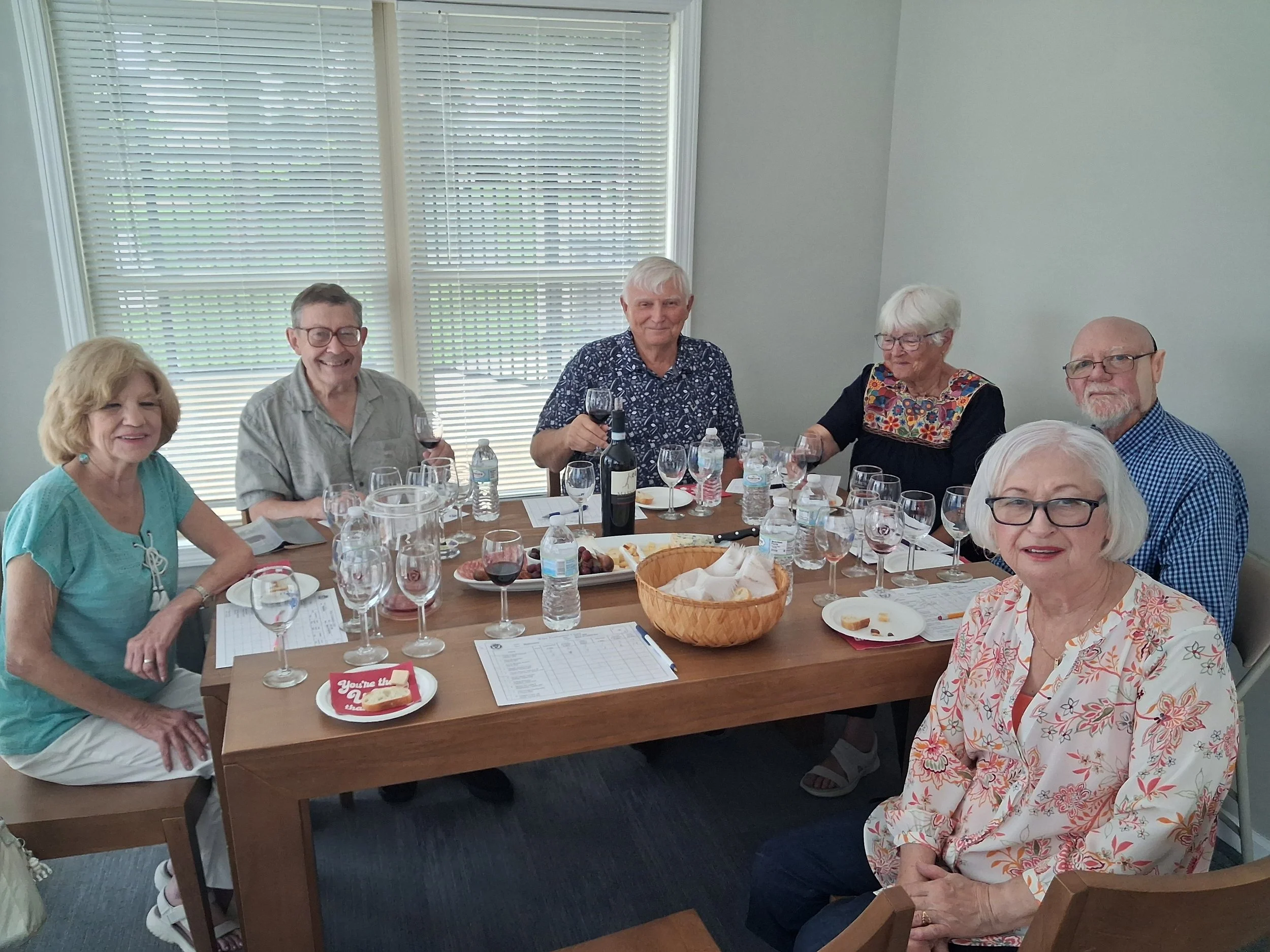
This is the third National Tasting Project (NTP) that Alice and I have hosted and at least the fifth that we’ve attended. Though I do like the concept, I’m not a huge fan of the wines that are selected or the idea that one can rate very different wines within the same setting. See my notes at the very end of this piece regarding another NTP that we attended a month later.
I’m also a bit skeptical of the source of the wines which are used for this event. An NTP is hosted by chapters all over the US and abroad. In each tasting, the same wines are tasted. Not all chapters taste all of the wines, but the tasting is selected by the host from a list of about a dozen that are offered by a supplier who has been selected by the American Wine Society (AWS) committee of the NTP. I’ve felt that the wines didn’t offer much in the way of value so in our tasting, we added a couple of wines purchased locally to get some sort of context of value.
Central Italy includes five wine regions but our tasting only included four of them. Tuscany, Umbria, Marches and Abruzzo. What?! No Frascati from Latium? I remember when getting Frascati in Michigan that was less than a year old was as big an event as Beaujolais Nouveau. Up until a decade or two ago, most Central Italian wines were mostly common everyday value wines best suited to very casual meals at your local pizzeria. Because the price is still very competitive compared to other European imports, these wines still serve that purpose, but in the meantime, the quality has risen dramatically with better farming and winemaking practices. We tasted ten wines total with a pair to start us off (the Fabulas Rosé and Marso Montepulciano d’Abruzzo). Then we tasted the four white wines and then the four red wines. Here, I will list the wines by color and by the average score given. Because none of the wines were flawed, I have deleted any score under 12 because a wine which has no detectable flaws would score 12 or higher according to the official guidelines of wine judging for every competition I’ve ever judged. One can think of it this way. When you judge on a 20 point scale, multiply the score by 5 to get a test score type of grade. That is 18-20 x 5 = 90-100 which would correspond to an “A” or “Gold Medal” in wine judge nomenclature. Likewise, 16-17.9 x 5 = 80-89 which would correspond to a “B” or “Silver Medal” and 14-15.9 x 5 = 70-79 corresponding to a “C” or “Bronze Medal”. If a wine is flawed, it does not get a medal and if not flawed just very boring and unappealing it could score a 12 - 13.9 x 5 = 60- 69 corresponding to a “D” no medal. I have converted all of the scores to a 100 point scale. Once all of the scores from all over the world are put together, the AWS will publish the scores based on three criteria. One set of scores will be certified wine judges, the second set of scores will be AWS members who are not certified and the final set will be only the wines consistently among all chapters scoring in the top three. As I’ve said before, when you take an average of all judges, then all of the wines end up with an average score. By looking only at the wines which score in the top three consistently, then, regardless of individual or averaged scores, the cream of the crop quickly and emphatically emerges. Once those scores are made public, I will add them to this post. I list the prices paid to the online retailer that supplied the wines as “+ SH+” because the shipping was about $4 per bottle additional. The wines are listed below by color and by score highest to lowest in each category. They were not necessarily tasted in that order, however.
ROSÉ WINE
2023 Fabulas Fortitudo Cerasuola d’Abruzzo $17.99 + SH The beautiful strawberry red color couldn’t be more appealing to the eye. The nose is composed of bright lemon-like citrus peel and minerals with a fairly dry finish reminiscent of some kind of wild red berry such as thimbleberries. My score 84, group score 75 points Bronze
WHITE WINES
2024 Bocale Valentini Trebbiano Spoletino, Umbria $19.99 + SH Wow! This wine has what the Germans call emphatic bouquet. That is, the phenols offer up a nose that first and foremost smells like the grapes from which it was made. It is very ripe and even a bit muscat-like though balanced by a slight bitterness More suave than smooth, Alice called it a winner. My score 88, group score 86 points Silver TOP THREE
2024 Lucchetti Birbaccio Verdiccio dei Castelli di Jesi Classico, Marches $14.99 at the Village Corner Very complex layers of exotic fruit remind me of the berry/grape candy one finds in Asian markets. It is robust, hefty and full bodied with enough lively acid to dance on the palate. My score 88, group score 84 points Silver TOP THREE
2024 Ciu Ciu Merlettaie Pecorino, Marches $14.99 SH Pleasant light lemon citrus greets while a delicate yet bright fresh acid enhances the mouth feel. It would be lovely to enjoy at a seaside café overlooking the Adriatic. My score 80, group score 77 points Bronze
2023 Palagetto Vernaccia de San Gimignano, Tuscany $15.99 + SH The immediate impression from the ripe pear-like fruit essence is that this wine has gained complexity. Salt water taffy and custard with lush, soft texture shows that this wine is at its peak. Glad we could enjoy it now while it is still clean and crisp. My score 85, group score 75 points Bronze
RED WINES
2016 Perticaia Monteflaco Sagrantino, Umbria 2016 $33.99 + SH The deep black red color shows the age with a good quarter inch of transparency on the meniscus. The massive bouquet of black condensed fruit infused with terra cotta, dust and forest floor really amps up when it hits your palate. The tannin is huge. Yet the way it melts in your mouth leaving a fine long sensation for ten seconds found a fan in my sister, Linda, who only drinks white wine! My Cabernet-holic wife said she couldn’t put down her glass it was so smooth and inviting. At ten years, the age really separated it from the other wines. My score 95 my top three, group score 81 points Silver TOP THREE?? certainly on my score sheet!
2023 Marso Montepulciano d’Abruzzo $20.99 + SH The black dense color is nearly opaque in the glass. Big spice, bold black cherry scent and an interesting wood spice not unlike shoe polish (yes, this is not a bad smell among very dense fat young wines) completes the picture. It also possesses a burnt, smoky, ash-like component* that added a nice spice that lasted throughout the long well textured finish. My score 83, group score 81 points Silver
2021 Salcheto Vino Nobile de Montepulciano, Tuscany $21.99 + SH Typically, this AVA is one of my favorite Tuscans. This one is just a bit too soft and light to show off its attributes of complexity and elegance. There is a bit of nice rustic gripping texture but not much else. My score 80, group score 81 points Silver
2023 Terre di Poggio Montepulciano d’Abruzzo $11.99 at the Village Corner The black purple color gives a preview to its strength and suppleness. The potent medicinal cherry kirshwasser/slivovitz liqueur-like volatility in the nose comes back down to earth with plenty of plum and port-like ripe grape flavors. It is quite lush and round, hardly giving notice to what is actually a pretty full body of gripping texture. The bargain of the evening! My score 92 my top three, group score 78 points Bronze
2022 Palagetto Chianti Colli Senesi, Tuscany $12.99 + SH Because it is lighter, softer and simpler than most of tonight’s wines, it kind of got lost in the shuffle. It is actually a very pleasant wine to enjoy as a very casual quaffer at your local pizzeria. My score 75, group score 78 points Bronze
By and large, I felt that the wines chosen by the AWS committee were typical of their origin and of good quality. Perhaps they are a little over priced but still within the range one would expect to pay for these regions. I did feel that the wines which were purchased locally were definitely a better buy and were among my top three choices. When I get the national scores, we’ll see if our top three were tops among all groups tasting these same wines. Meanwhile, I’ve added more notes from another NTP we attended in Grand Haven on the same topic but all new wines (scroll down below the pictures).
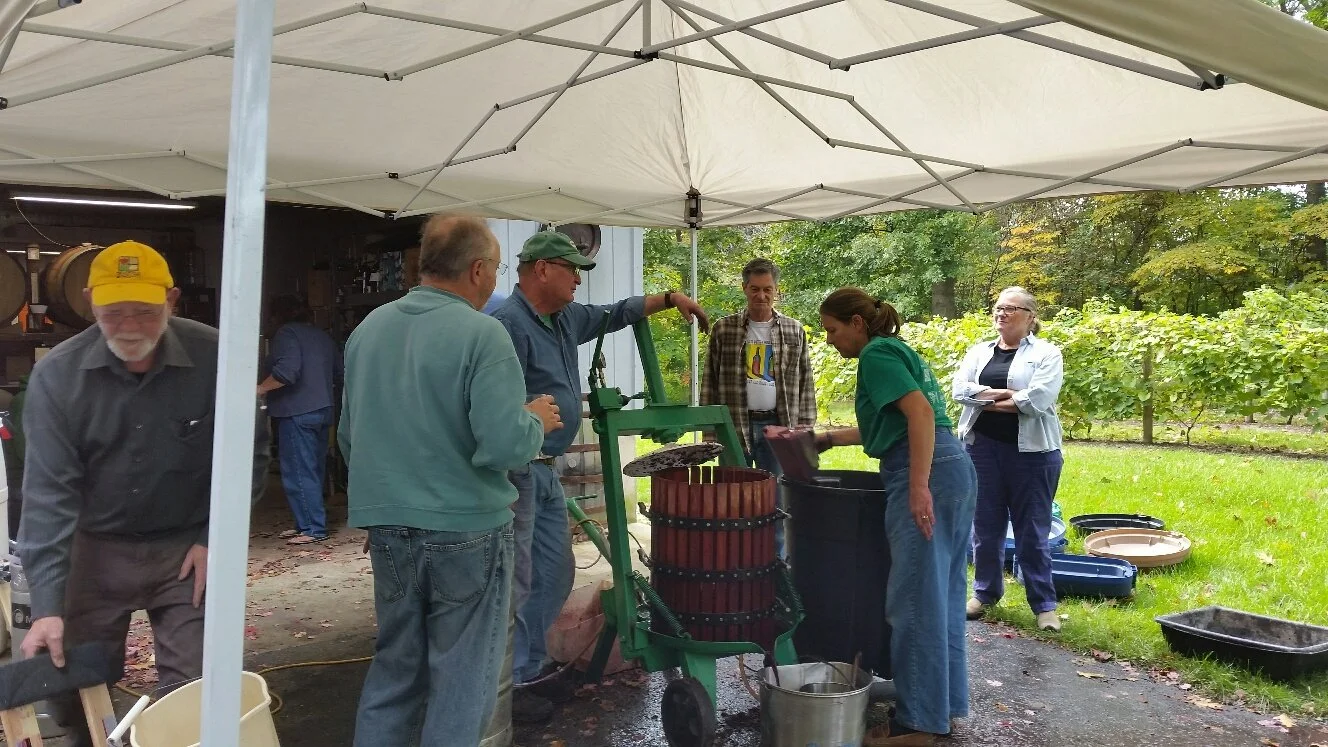
*As soon as I tasted the Marso Montepulciano d’Abruzzo, I thought of an incident that took place years ago when Alice and I along with Tom and Kim LeRoux were making wine together. It had been a large crop and we had every container we had at the ready when we started to press the grape must. What we had not anticipated was the huge amount of wine we got off of these fully fermented grapes. Normally, you get something like a gallon per fifteen pounds of grapes but we were getting more than a gallon per 12 pounds. So, we ran out of all of our stainless steel and glass storage and still had grapes to press. All of our seasoned barrels were full of wine. Fortunately, we had just received a shipment of heavy toast Missouri oak barrels a few days prior. So we peeled off the seal on the bung and filled one up with the freshly fermented wine off the press. Normally, we allow the wine to settle out to a nearly clear state before putting it into barrels. We also normally thoroughly wash the inside of the barrel and soak it for a day or two with sulfited water before putting any wine into it. But, this was an emergency. Wine was dripping off the press and in minutes it would be flowing down the driveway if we didn’t do something immediately. Well, brand new barrels, especially those with heavy Bourbon-style toast contain a good amount of ash, burnt black sawdust and bits of what looks like charcoal. A few months later, I tasted the wine from this barrel when it was time to rack it clear into another barrel and it certainly had the same flavor as the Marso Montepulciano d’Abruzzo. Fortunately, it was a big crop so once that barrel was blended with the rest of the wine, that burnt ash component was a subtle nuance very well liked by all of us. I have to wonder if Marso washes their new barrels before using them.
Central Italy NTP August 20, 2026
I debated whether to make this a separate post or just add it to my existing Central Italy NTP and decided on the latter. As it turns out, all of the wines I ordered for our tasting were out of stock when the Lakeshore chapter placed its order so many vintage substitutions were made as well as totally different wines were substituted. Certainly, some of the substitutions were for the better. Below I’m reporting the scores based on a 20 point system directly from the score sheets as compiled by our host. I’ve included the corresponding AWS medal ranking too. All of the prices are those paid to the American Wine Society’s chosen importer except where noted. We gathered at the home of Phil and Sue Grefe in their yard which is abundantly lush with flowers and flowering trees surrounding one of the largest private home pools I’ve ever seen. The night was still and pleasantly temperate. We started with three warm up wines which I reviewed but were not included in the final scoring. The first warm up was 2024 Terra Fageto Pecorino Falerio, Marches $12.99 at Costco was a great find on Sue’s part because the one we had in our event had been substituted in this one. Also, the fruit is extremely pure with fresh minerality (yes, minerality can be extremely refreshing when there is no evidence of over sulfiting), great class with a supple honey like finish that somehow leaves the mouth fresh and dry. I agree with the critics and would score it in the nineties. The second warm up was 2022 Kirkland Chianti Classico Riserva , Tuscany $8.99 at Costco is one of those inexpensive wines that we tend to drink within days of purchase, yet I’m certain that it is a serious enough wine that it should last and evolve positively for a decade or more. It does possess dusty cocoa like spice and rich strawberry fruit and a rustic earthy complexity. Our final warm up was 2024 Torre Zambra Montepulciano d’Abruzzo, Abruzzo $8.99 at Costco demonstrates why these wines are just perfect for casual meals. The fresh berry scents, supple palate and long tannic finish fill the bill perfectly to accompany food and keep the palate fresh and hungry.
I will add the national scores to this post as soon as I hear from the NTP national committee.
WHITE WINES
2023 Palagetto Vernaccia di San Gimignano, Tuscany $17+SH is a pretty wine with just a titch of golden hue. It is remarkably aromatic with spicy fresh exotic ripe mango up front and an incredible mid-palate of super ripe juicy phenolics. My score 17/20, Group Score 17.1/20 Silver 2024 Bigi Orvietto Classico, Umbria $12 Village Corner, Ann Arbor was included because I just have so many fond memories of Orvietto. In the old days, we got Orvietto Abboccatto which had a savory nut and honey-like subtlety. This Classico had very rich drippy legs and is nothing but vinous. It is hard to grasp that it is a white wine. It is so rich and creamy yet demonstrates pure grape essence. My score 16/20, Group Score 17.8/20 Silver
ROSÉ WINE
2024 Fabulous Fortitudo Cerasuola d’Abruzzo, Abruzzo $18+SH is a year younger than the bottle we tasted a month ago. Though the gordeous red-orange color is identical to the 2023, the flavor seems a little bit unsettled. It offers plenty of red wine weight and body, good fresh fruit but there is also a slightly nagging background scent of something plastic. My score 16-/20, Group Score 16.3 Silver
RED WINES
2024 Palagetto Chianti Colli Senesi, Tuscany $14+SH is two years younger than the bottle in the previous tasting and is far better for it. This wine has a big earthy rich nose that morphs into agile fresh vital red fruit zip and a long refreshing finish. My score 17+, Group Score 17/20 Silver 2022 Salcheto Vino Nobile di Montepulciano, Tuscany $23+SH is a year younger than the bottle in the previous tasting but showed no better, maybe worse. Though the pretty rouge color portends bright fruit, the wine is actually pretty mild. No faults, but its tannin grip is about the only compelling attribute. My score 15/20, Group Score 18.4/20 GOLD - TOP THREE 2024 Torre Zambra Montepulciano d’Abruzzo, Abruzzo $8.99 at Costco is, in fact, the same wine as one of our warm ups. Yes, this can happen with a blind tasting when more than one person is selecting the wines and has vowed secrecy. But, it was good so see how a good old every day wine would stack up against wines chosen by the AWS certified wine judges. I loved the deep red color and liqueur-like berry scents. It has fine balance, complex subtle nuances and, dare I say, a Napa-like complete palate of smells and tastes with a round, plump texture. My score 18/20, Group Score 18.7/20 GOLD - TOP THREE 2020 I Luoghi Podere Ritorti Bolgheri, Tuscany $38+SH was a substitute by the importer and what a substitute it is! Wow, the black red color only begins to show what a rich rich rich red wine is in our hands. This is a Super Tuscan made from Meritage varietals. There is a depth and class that are remarkable with long wood spice carrying to the long fine textured finish. My score 18-/20, Group Score 17.6/20 Silver 2020 Bocale Valentini Valentino Montefalco Sagrantino, Umbria $35+SH is another substitute and again, it is a real dandy. The massive black red color is monstrously opaque. Oh my, this is big time! Layer upon layer of flavor with class maturity and a huge texture that finishes with a compelling need for more. My score 20/20, Group Score 18.7/20 GOLD - TOP THREE
What matters most are the TOP THREE. I am very surprised that the Vino Nobile di Montepulciano came up in that group. It was the only wine in which my score was much different than the group score. It was clearly not one I’d recommend yet everyone else loved it. What surprised me was that the $9 Costco special was in the TOP THREE too. No surprise on the magnificent Montefalco Sagrantino. What a wine!! I was also a little surprised that the $12 Orvietto bought at the Village Corner was the best of the white/rosé wines. Clearly all of the wines were well liked but with all the substitutions and vintage changes from the importer, it will be interesting to see how the national committee comes up with any kind of consensus. It reminds me of printing wine lists at the Amway Grand and having to change the vintages or producers with every wine delivery.
Look for additional information here in a few months when the national committee comes in with the averages of all the judges including all of the Certified Wine Judges (like me).
Enjoy in Good Health,
A Brian Cain, the Michigan Vintner