Foraging on the Golf Course

Alice loves to search for golf balls when we are on the course. She typically comes home with at least a dozen brand new spankin’ clean balls every time we play. So, while she was foraging for golf balls, I decided to so a bit of foraging myself.
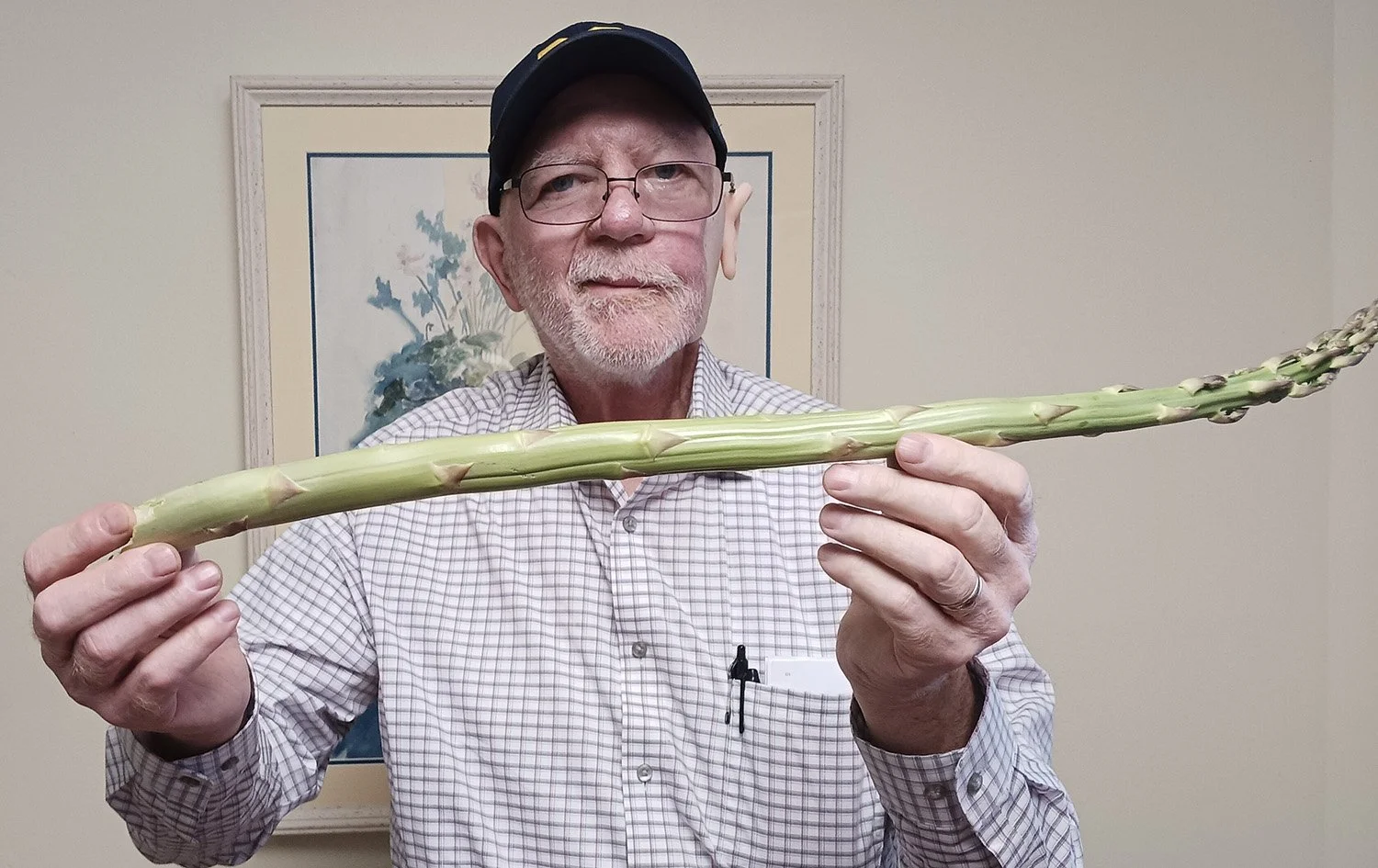
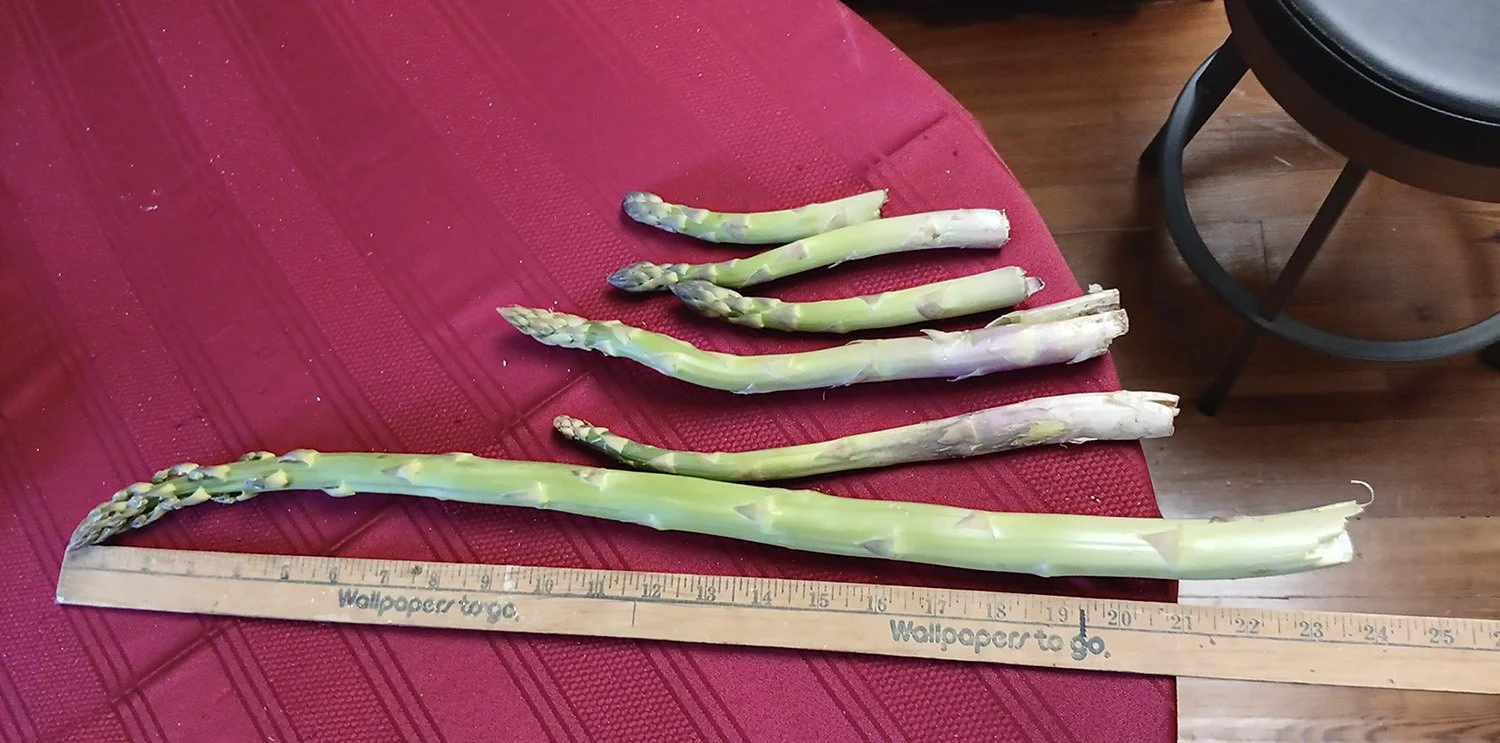
We had stopped and were waiting for the group in front of us so Alice was busy looking for balls. As I’m sitting in the cart off to my left I spot what looked like a giant asparagus stalk. Upon further examination, it was a small clump of emerging asparagus. I picked them all and brought them home. This 24” asparagus stalk is the longest I’ve ever eaten but not the largest in terms of girth. I once had a stalk that was about a foot long but maybe two inches across.*
Let me clear up a common misconception about asparagus in particular and all stringy vegetables in general. All stalks of asparagus have about the same number of strings in them. So, if you have a very skinny asparagus stalk, it is mostly string and not much flesh. Skinny asparagus can be extremely stringy, chewy and even a bit crunchy. The larger the asparagus stalk. the more tender because of a much higher ratio of flesh to string. This is one of the reasons why Michigan asparagus is considered the best in the world. Generally, it has much fatter stalks and therefore more tender. When picking wild asparagus, you’ll find that it is just as tender as domestically grown but will probably have more flavor. The very concentrated taste of wild asparagus is not unlike canned asparagus with a slight dill pickle essence to it. Of course, terroir will dictate many of the subtleties. Don’t be afraid to over cook it. Fresh asparagus has enough fiber to hold up and keep its shape.
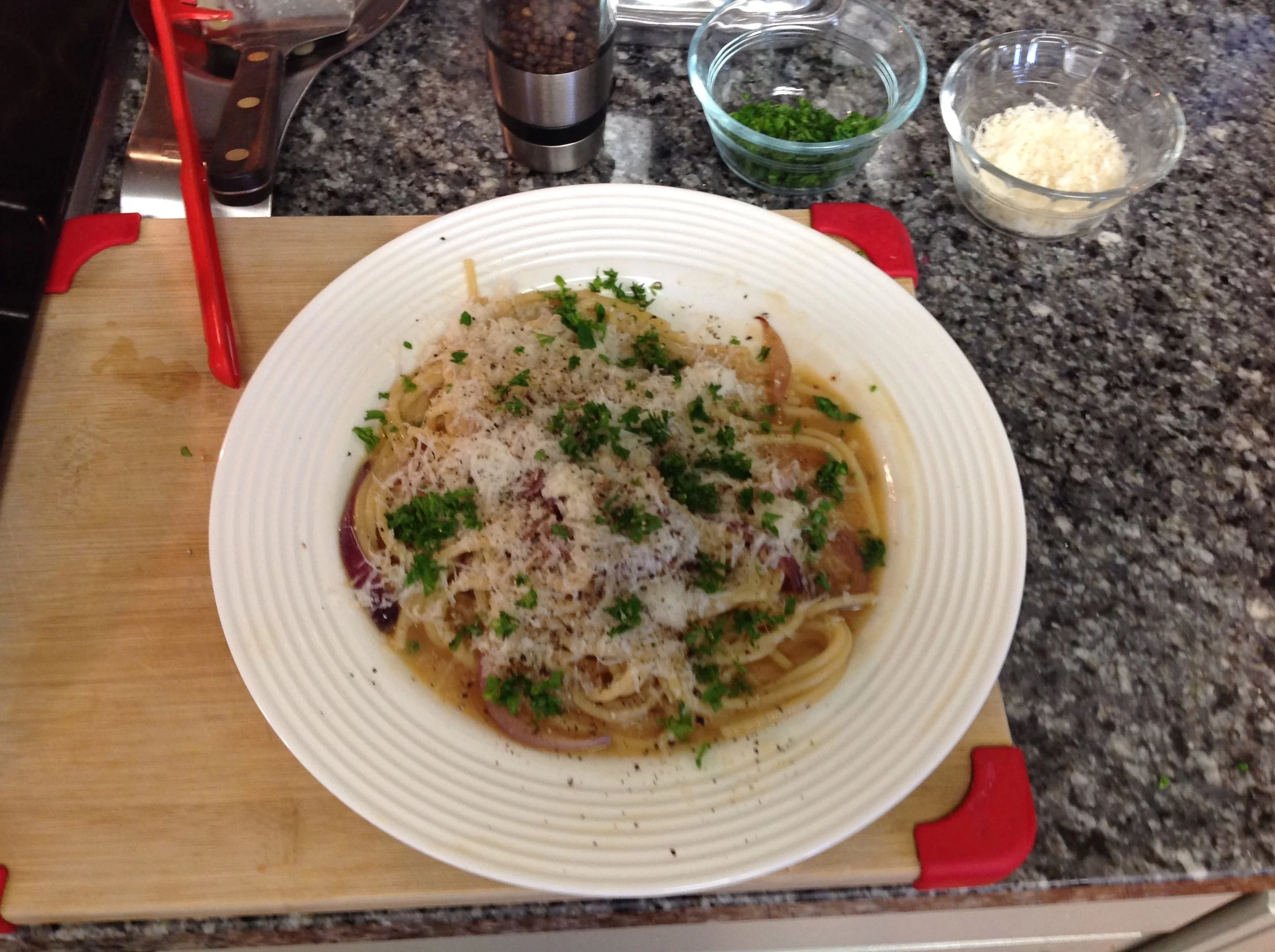
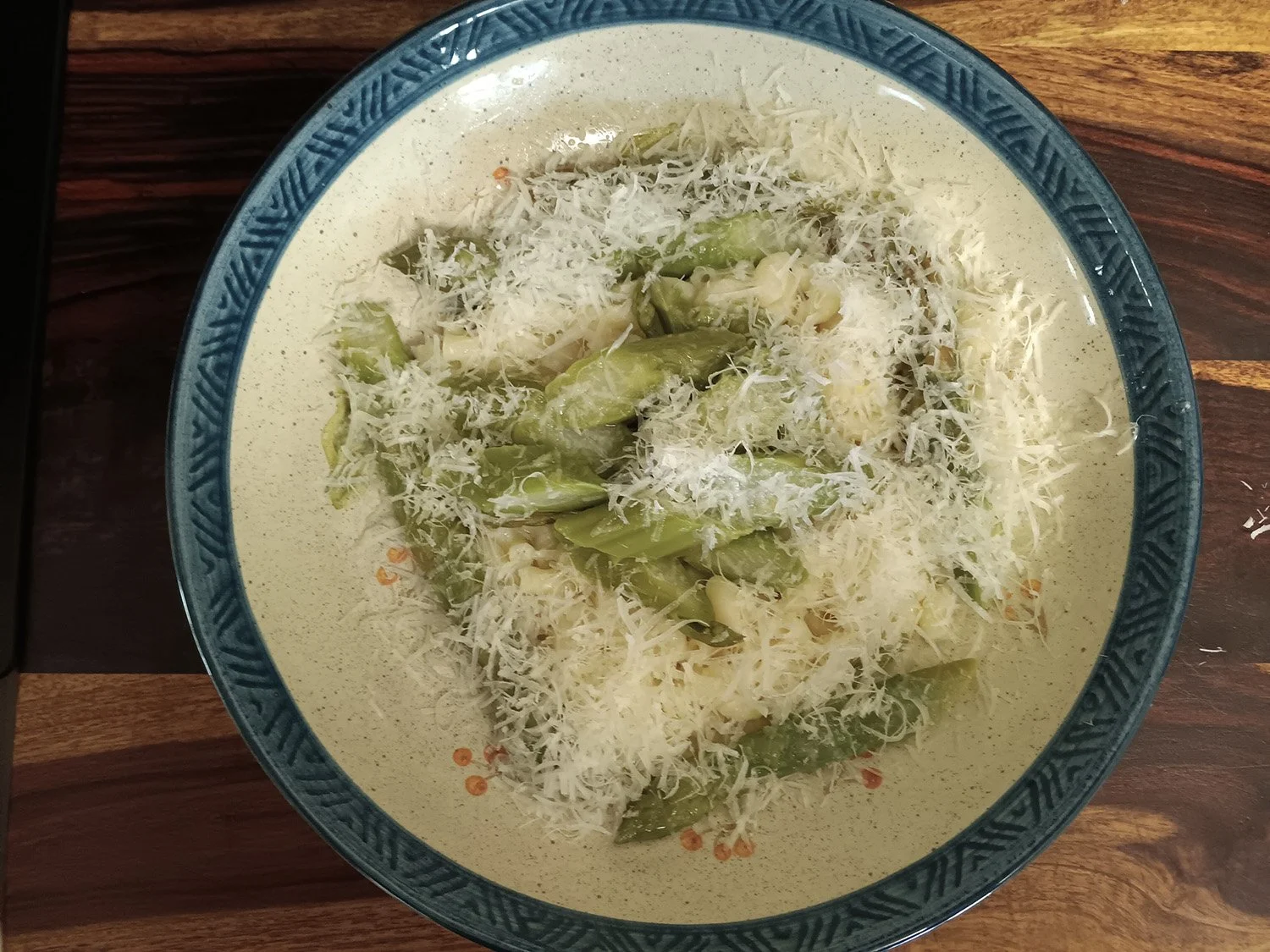
Pictured in the attachments is the dish I chose to showcase my wonderful find. It is simply cacio e pepe with buttered asparagus. Here is the recipe.
Cacio e Pepe with Asparagus
Boil the asparagus until very tender. Meanwhile, cook the pasta in just enough salted water with olive oil a little beyond what the pasta will absorb. The less water you use, the more concentrated the delicious starchy stock becomes. When both the pasta and the asparagus are tender, drain the pasta saving the cooking liquid. Drain the asparagus and return it to the pan with lots of butter. Meanwhile, in the empty pasta pot put in butter along with smashed and minced garlic and shallot. Allow the garlic and shallot to steep in the hot butter for a minute or two, put the pasta back into the pot, give it a good stir and then plate the pasta. Garnish the pasta with cracked pepper, pec ‘n parm cheese and, of course, the buttered asparagus. If you like your pasta soupy, add some of the pasta water. Whatever pasta water you have left makes a wonderful hot drink to conclude your meal. So simple that it perfectly allows the asparagus to be the star.
Enjoy in Good Health,
A Brian Cain, the Michigan Vintner
*Back when I worked at the Amway Grand Plaza, the vegetable kitchen was just outside my office. When they’d sort asparagus the “bad” ones were deposited into a bin next to my door. One day I walked out of my office and on top of the heap was a giant stalk of asparagus a foot long and a good two inches in girth. I snatched it out of the bin and retired to my office to gobble it down. Yes, that big devil was so tender, I just ate it raw.